As Brazil claims climate leadership, it pushes oil and gas drilling in the Amazon, revives the forest destroying BR-319 highway, and advances mining and dam projects on Indigenous lands. While headlines boast “deforestation is down,” destruction and violence persist. Petrobras, ExxonMobil, Chevron, and CNPC drill for oil and gas at the Amazon River’s mouth. Shell’s PR firm, Edelman, was hired by Brazil’s COP 30 presidency. Even wildlife is exported for zoo displays and “ornamental purposes”, as “diversification.” This isn’t climate action — it’s the commodification of life itself!
Meanwhile, in Nemours, France, at the Bridge Gallery is presenting a COP30 Exhibition on the Timeless Colonial Theme of Exploiting Wildlife:
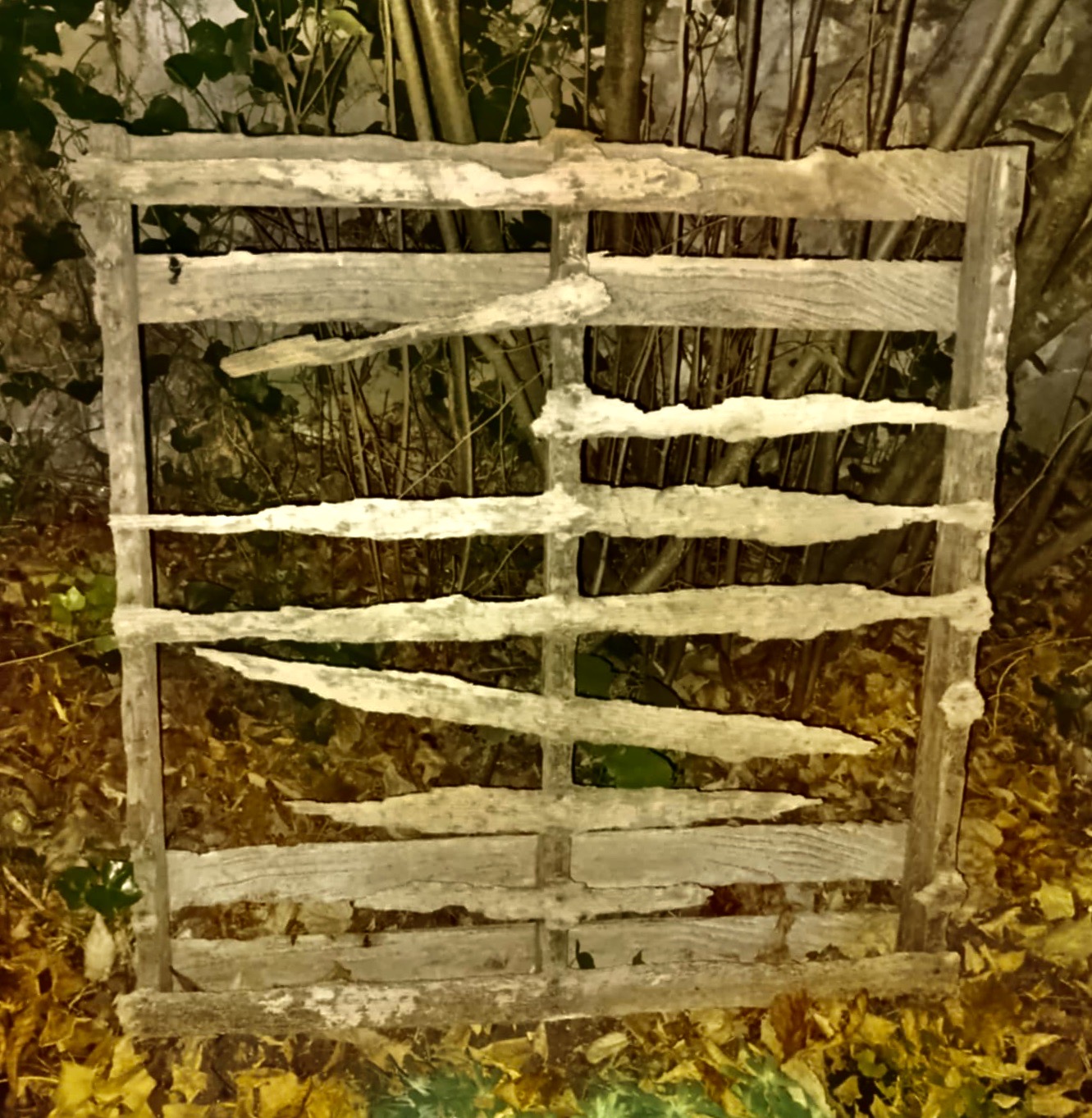
« From the Wreck of the Slave Ship » (Work in Progress)
Outdoor installation – Murukuãîa Artist Collective This living artwork, carried by the Nutria and unfolding over time, takes its title as a counterpoint to Damien Hirst’s fabricated treasure spectacle. Instead of luxury myths, it calls up the true wrecks of history: slave ships, blood gold, poisoned rivers. Outdoors, it will never be “finished” — birds will add their white inscriptions, spiders will weave their veils, fungi and lichens will slowly claim the surfaces. Other artists, human and non-human, will continue to participate, altering and deepening the piece in unpredictable ways. It is an installation that refuses fixity: a reminder that resistance, like decay, is always in motion.
About Barbara Crane Navarro - Rainforest Art Project
I'm a French artist living near Paris.
From 1968 to 1973 I studied at Rhode Island School of Design in Providence, Rhode Island, then at the San Francisco Art Institute in San Francisco, California, for my BFA.
My work for many decades has been informed and inspired by time spent with indigenous communities. Various study trips devoted to the exploration of techniques and natural pigments took me originally to the Dogon of Mali, West Africa, and subsequently to Yanomami communities in Venezuela and Brazil.
Over many years, during the winters, I studied the techniques of traditional Bogolan painting. Hand woven fabric is dyed with boiled bark from the Wolo tree or crushed leaves from other trees, then painted with mud from the Niger river which oxidizes in contact with the dye.
Through the Dogon and the Yanomami, my interest in the multiplicity of techniques and supports for aesthetic expression influenced my artistic practice. The voyages to the Amazon Rainforest have informed several series of paintings created while living among the Yanomami. The support used is roughly woven canvas prepared with acrylic medium then textured with a mixture of sand from the river bank and lava. This supple canvas is then rolled and transported on expeditions into the forest. They are then painted using a mixture of acrylic colors and Achiote and Genipap, the vegetal pigments used by the Yanomami for their ritual body paintings and on practical and shamanic implements.
My concern for the ongoing devastation of the Amazon Rainforest has inspired my films and installation projects. Since 2005, I've created a perfomance and film project - Fire Sculpture - to bring urgent attention to Rainforest issues. To protest against the continuing destruction, I've publicly set fire to my totemic sculptures. These burning sculptures symbolize the degradation of nature and the annihilation of indigenous cultures that depend on the forest for their survival.


 Barbara Crane Navarro
Pingback: COP30 — Another Climate Travesty! | Barbara Crane Navarro | Ned Hamson's Second Line View of the News