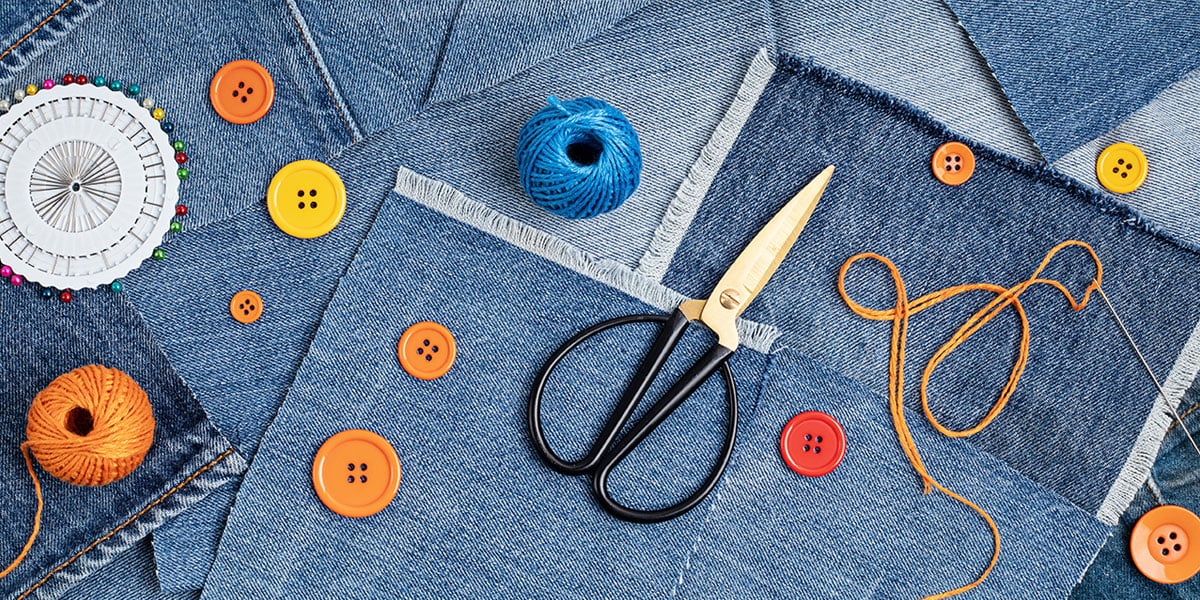
What is Upcycling? Upcycling is to take old clothing, whether that is a damaged or thrifted item, and transforming it into something new. Why is Upcycling important? Many fast fashion manufacturers have doubled clothing production in the last 15 years. IMMAGO brings to light the fact that “the industry is basically a conveyer belt that […]
About Barbara Crane Navarro - Rainforest Art Project
I'm a French artist living near Paris.
From 1968 to 1973 I studied at Rhode Island School of Design in Providence, Rhode Island, then at the San Francisco Art Institute in San Francisco, California, for my BFA.
My work for many decades has been informed and inspired by time spent with indigenous communities. Various study trips devoted to the exploration of techniques and natural pigments took me originally to the Dogon of Mali, West Africa, and subsequently to Yanomami communities in Venezuela and Brazil.
Over many years, during the winters, I studied the techniques of traditional Bogolan painting. Hand woven fabric is dyed with boiled bark from the Wolo tree or crushed leaves from other trees, then painted with mud from the Niger river which oxidizes in contact with the dye.
Through the Dogon and the Yanomami, my interest in the multiplicity of techniques and supports for aesthetic expression influenced my artistic practice. The voyages to the Amazon Rainforest have informed several series of paintings created while living among the Yanomami. The support used is roughly woven canvas prepared with acrylic medium then textured with a mixture of sand from the river bank and lava. This supple canvas is then rolled and transported on expeditions into the forest. They are then painted using a mixture of acrylic colors and Achiote and Genipap, the vegetal pigments used by the Yanomami for their ritual body paintings and on practical and shamanic implements.
My concern for the ongoing devastation of the Amazon Rainforest has inspired my films and installation projects. Since 2005, I've created a perfomance and film project - Fire Sculpture - to bring urgent attention to Rainforest issues. To protest against the continuing destruction, I've publicly set fire to my totemic sculptures. These burning sculptures symbolize the degradation of nature and the annihilation of indigenous cultures that depend on the forest for their survival.
Unfortunately, “preloved,” upcycled, etc. is already such a trend that it is driving a new stream of (over)consumption.
As soon as retail chains and even producers throw themselves into such a phenomenon, you know it is no longer sustainable.
I hope that repairing, reusing and sharing locally will become more popular than buying new “brand name” items that are shipped from the other side of the globe.
Excellent idea! If repairing, reusing and sharing locally could become more popular than buying new “brand name” items that are shipped from the other side of the globe, it would be helpful!

 Barbara Crane Navarro
Unfortunately, “preloved,” upcycled, etc. is already such a trend that it is driving a new stream of (over)consumption.
As soon as retail chains and even producers throw themselves into such a phenomenon, you know it is no longer sustainable.
LikeLiked by 1 person
I hope that repairing, reusing and sharing locally will become more popular than buying new “brand name” items that are shipped from the other side of the globe.
LikeLike
Pingback: The Importance of Upcycling — Then and Now | Ned Hamson's Second Line View of the News
Yes, and I feel that this should become a legislatively supported practice in the west
LikeLiked by 1 person
Excellent idea! If repairing, reusing and sharing locally could become more popular than buying new “brand name” items that are shipped from the other side of the globe, it would be helpful!
LikeLiked by 1 person
Just imagine – clothes and other good too, it would so reduce carbon etc. as well as killing nature.
LikeLiked by 1 person
Absolutely!
🦋🦉🐦🐯💚🌍🙏💚🐻🐸🐰🐵🐒
LikeLiked by 1 person